Author:DavisDate:2026-4-10
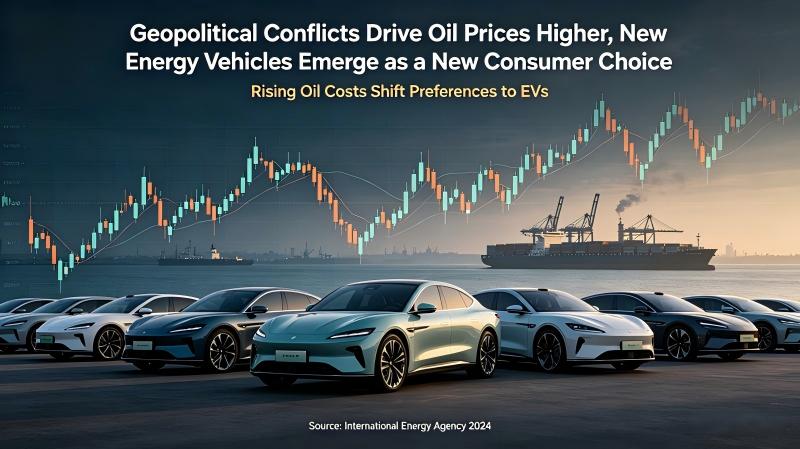
Since the outbreak of the Iraq War, the global energy market has experienced severe turbulence, with international oil prices soaring and triggering a structural shift in the global automotive market. Driven by persistently high oil prices, various new energy vehicles have seen explosive sales growth due to their significant cost advantages, becoming a core highlight of the current automotive market and further highlighting the trend of transitioning from gasoline to electric vehicle consumption.
It is reported that the Iraq War has entered its second month, with Iran blocking the Strait of Hormuz, a vital global energy trade chokepoint—carrying approximately one-fifth of global oil and gas trade. The disruption of navigation has directly led to a widening of the global crude oil supply gap, pushing international oil prices sharply higher. Data shows that in the month since the outbreak of the Iraq War, New York crude oil futures prices have surged from below $70 per barrel to above $110 per barrel in early April, while Brent crude oil futures prices have risen by more than 40%, marking the largest monthly increase in history. Even though the US and Iran recently accepted Pakistan's ceasefire proposal, and the Strait of Hormuz is expected to allow safe passage within two weeks, leading to a temporary drop in international oil prices, several European financial institutions predict that oil prices will be difficult to return to pre-conflict levels in the short term, and there is a risk of a rebound due to recurring tensions.
-2215604.jpg "新闻配图生成需求概述 (4).jpg")
The continued rise in oil prices has directly increased the operating costs of gasoline-powered vehicles, significantly shifting consumer purchasing decisions. In the US, as of April 8, the national average gasoline price reached $4.14 per gallon, the highest level since August 2022. The EIA predicts that gasoline prices may reach a peak of $4.30 per gallon in April, and diesel prices may reach a peak of $5.80 per gallon. If the issue of navigation in the Strait of Hormuz is not clearly resolved, gasoline prices may even break the historical record of $5 per gallon. In China, refined oil prices have been raised multiple times. For a family gasoline-powered car that travels 2,000 kilometers per month, the annual fuel cost has increased by nearly 4,000 yuan compared to before. This significant cost difference is causing more and more consumers to turn their attention to new energy vehicles.
The cost difference brought about by rising oil prices has directly translated into a sales boom for new energy vehicles, resulting in a surge in both volume and price in the global new energy vehicle market. In the domestic market, the estimated wholesale sales volume of new energy passenger vehicles in China reached 1.12 million units in March 2026, a significant increase of 55% compared to February. The retail penetration rate of new energy passenger vehicles exceeded 50% in the first half of March, meaning that one out of every two new cars sold was a new energy vehicle. Feedback from dealerships is even more direct: new energy vehicle 4S stores in Jinjiang, Chongqing, Wuhan, and other cities have seen a surge in customer traffic. Some BYD stores experienced peak-hour customer traffic that tripled compared to previous periods. The Wuhan Voyah store is expected to see a 50% increase in orders in March compared to February, and the average daily orders at the Jinjiang BYD store have increased from 6-7 units to over 10 units, nearly doubling.
-1594190.jpg "新闻配图生成需求概述 (3).jpg")
The growth momentum in the global market is equally strong. New energy vehicle sales in Southeast Asia, Australia, Europe, and other regions have all seen significant growth. Several countries have experienced a surge in orders and stockouts for some models. Chinese brands have performed particularly well in overseas markets, becoming a significant force driving the popularization of new energy vehicles in these regions.
Industry analysts believe that the oil price surge triggered by the US-Iran war has not only amplified the economic advantages of new energy vehicles but also fundamentally shifted consumer purchasing attitudes. The previous consumer logic prioritizing brand and appearance is gradually shifting towards a "cost-first" approach, with over 80% of gasoline car owners prioritizing new energy vehicles when replacing their vehicles. Simultaneously, rising oil prices have further highlighted the importance of energy security, leading to increased emphasis on renewable energy by governments and consumers worldwide, injecting sustained momentum into the new energy vehicle industry.
-4681074.jpg "新闻配图生成需求概述 (2).jpg")
However, some experts caution that the impact of rising oil prices on new energy vehicles has its limits; it's more of a "catalyst" than a "determinant" factor in industry development. Rising oil prices may indirectly increase the costs of raw materials and logistics for new energy vehicles, and for users without home charging stations, the cost advantage of pure electric vehicles will be diminished. Vehicle price, resale value, and driving range remain crucial factors influencing consumer decisions. In the future, the long-term development of the new energy vehicle industry will still rely on technological iteration, infrastructure improvement, and product enhancement.
Currently, the ceasefire negotiations between the US and Iran are still ongoing. The resumption of navigation in the Strait of Hormuz and the development of the situation in the Middle East will continue to affect international oil price trends, thereby influencing short-term fluctuations in the new energy vehicle market. However, in the long run, the trend of switching from oil to electricity spurred by this oil price increase is expected to solidify into long-term consumer preferences, accelerating the global automotive market's move towards cleaner and electric vehicles.
↓Next [ We Will Attend 2026 Guangzhou Sourcing Fair | Booth M-D06 - Golf Carts Showcase ]