Author:DavisDate:2026-3-9
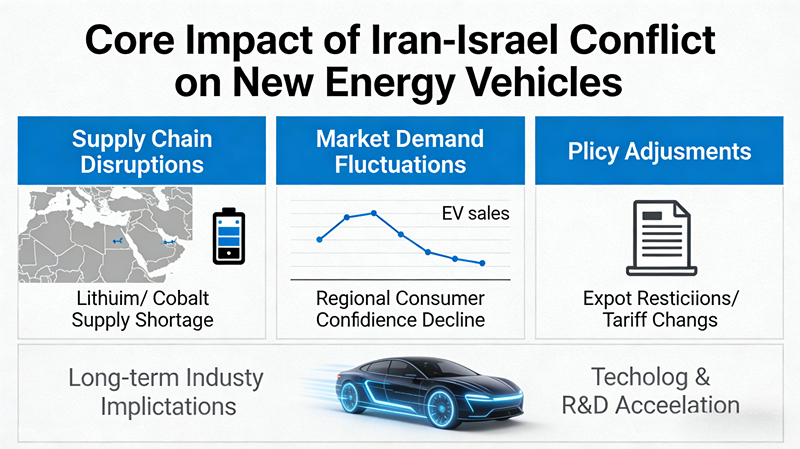
The escalating conflict between Iran and Israel has formed a pattern of "comprehensive short-term pressure and long-term structural benefits" for the new energy vehicle (NEV) industry. The core impacts are concentrated on logistics, costs, supply chains and regional markets, while also boosting global willingness to adopt electric vehicles.
Short-term Impacts (Most Direct)
Logistics Obstruction and Delivery DisruptionThe blockage of key shipping lanes such as the Strait of Hormuz and the Red Sea has left about 1,200 Chinese new energy vehicles stranded in the Gulf of Oman. Ro-ro ships detouring around the Cape of Good Hope have increased the voyage time by 10-14 days, raising the sea freight cost per vehicle by 1,500-2,500 US dollars and insurance premiums by 50%. Deliveries of NEV orders in the Middle East have been generally delayed by 1-2 months, with dealers facing stockouts and parts shortages, leading to rising default risks.
Regional Market Freeze and Double Blow to Orders and CollectionThe Iranian market has completely shut down due to frozen payment channels and intensified sanctions, resulting in a sharp drop in orders. Orders from Gulf countries such as Saudi Arabia and the United Arab Emirates have halved, as dealers suspend orders and extend the payment collection cycle. In 2025, China's NEV exports to the Middle East reached 1.39 million units, and the current high-turnover model has been severely hit.
Dual Pressure on Supply Chain and Costs- Critical raw material shortage: China relies on Iran for about 70%-78% of its celestite (a core raw material for permanent magnet motors), with domestic inventory only sufficient to support 3 months of production. Prices of battery raw materials such as methanol have risen amid the tense situation. - Production disruptions: KD (Knocked Down) assembly plants in the Middle East have been forced to adjust production plans due to blocked transportation of parts. The surge in oil prices has pushed up the costs of chemical materials such as plastics and rubber, further compressing automakers' profits.
Long-term Benefits (Structural Opportunities)
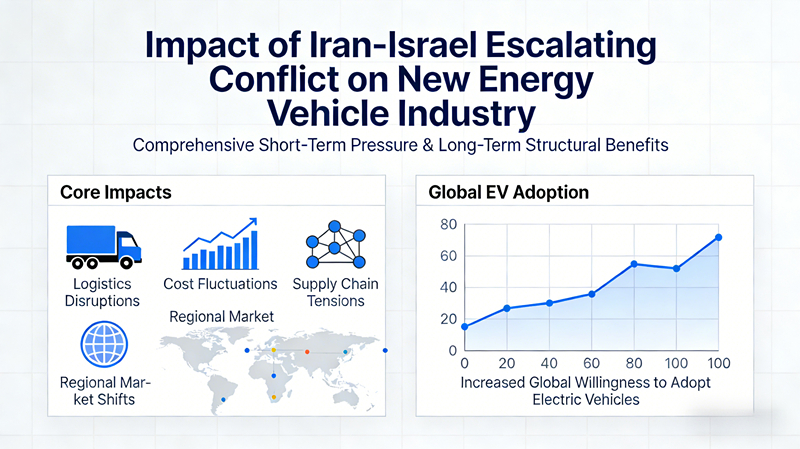
Surge in Oil Prices Highlights the Advantages of Electric VehiclesBrent crude oil soared above 90 US dollars in the short term, significantly increasing the cost of using fuel-powered vehicles. Global consumers' willingness to switch to new energy vehicles has been markedly enhanced, especially favoring Chinese brands with long-range and low-cost advantages.
Energy Security Drives Policy and Demand UpgradesCountries are accelerating the promotion of energy independence. Markets such as the Middle East and Europe are increasing efforts to promote new energy vehicles, and the combination of household energy storage and electric vehicles is favored for their emergency power supply capacity. China's advantage in the complete industrial chain is prominent, and its export share is expected to further increase.
Supply Chain Restructuring and Accelerated DiversificationAutomakers and battery companies are accelerating the expansion of alternative raw material channels in Russia, Central Asia and other regions, and promoting the construction of overseas KD plants and regional logistics centers. This reduces reliance on a single shipping lane and raw material country, shifting the industry from "cost-performance driven" to "safety driven".
↓Next [ Happy Lantern Festival 2026 ]